
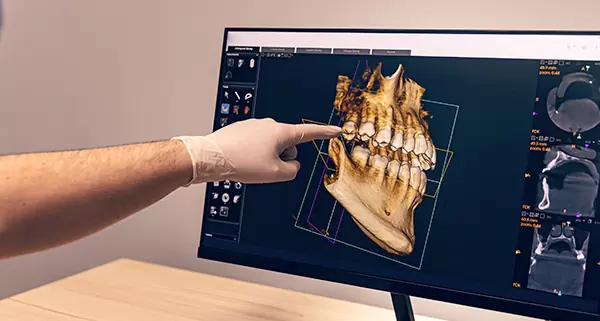
The Revolution of Artificial Intelligence in Dental Diagnosis
Dr. Josie Salloum
The integration of artificial intelligence (AI) in dentistry has marked a significant milestone in how dental problems are diagnosed and treated. In particular, the application of AI algorithms in diagnosis has transformed the precision and effectiveness of radiographic evaluations, allowing for the identification of problems in early stages and enabling more effective preventive treatments. This advancement not only improves the quality of dental care but also has the potential to reduce long-term complications.
The Power of Algorithms in Radiographic Imaging
AI in dental diagnosis relies on advanced algorithms designed to analyze radiographic images with a precision that surpasses human capability. Machine learning systems are trained with large datasets, allowing them to recognize patterns and anomalies with impressive speed and consistency.
1. Early Detection of Dental Problems
One of the greatest benefits of AI in dentistry is its ability to identify dental problems in their early stages. Algorithms can detect subtle signs of cavities, periodontal diseases, or structural anomalies that might go unnoticed in a conventional analysis. This early detection facilitates the application of preventive treatments before problems worsen.
2. Improved Diagnostic Accuracy
Accuracy is key in the dental field, and AI has proven to be a formidable ally in this regard. By eliminating the possibility of human error and examining every detail of a radiographic image, algorithms contribute to more precise diagnoses. This not only benefits the patient by receiving more appropriate treatment but also alleviates the workload of dental professionals.
Preventive Treatments and Complication Reduction
1. Personalization of Preventive Treatments
AI not only aids in the early identification of problems but also allows for the personalization of preventive treatments. By analyzing specific patient data, such as dental history, habits, and genetic predispositions, algorithms can suggest preventive strategies tailored to individual needs.
2. Reduction of Long-Term Complications
By intervening in the initial stages of dental conditions, AI-backed preventive treatments contribute to a significant reduction in long-term complications. Preventing the progression of periodontal diseases, advanced cavities, or structural problems not only preserves dental health but also minimizes the need for more invasive and costly procedures in the future.
Challenges and Ethical Considerations
Although AI in dental diagnosis offers substantial benefits, it also poses challenges and ethical considerations. Patient data privacy and the need for human oversight to interpret results are crucial aspects that must be carefully addressed.
The Future of AI-Driven Dentistry
Artificial intelligence in dental diagnosis is transforming how we understand and approach oral health. As technology evolves, we are likely to witness even more advancements, from more sophisticated diagnostic systems to practical applications in personalized treatment planning. Ultimately, the incorporation of AI in dentistry promises a future where prevention and precision merge to offer more effective and patient-centered dental care.